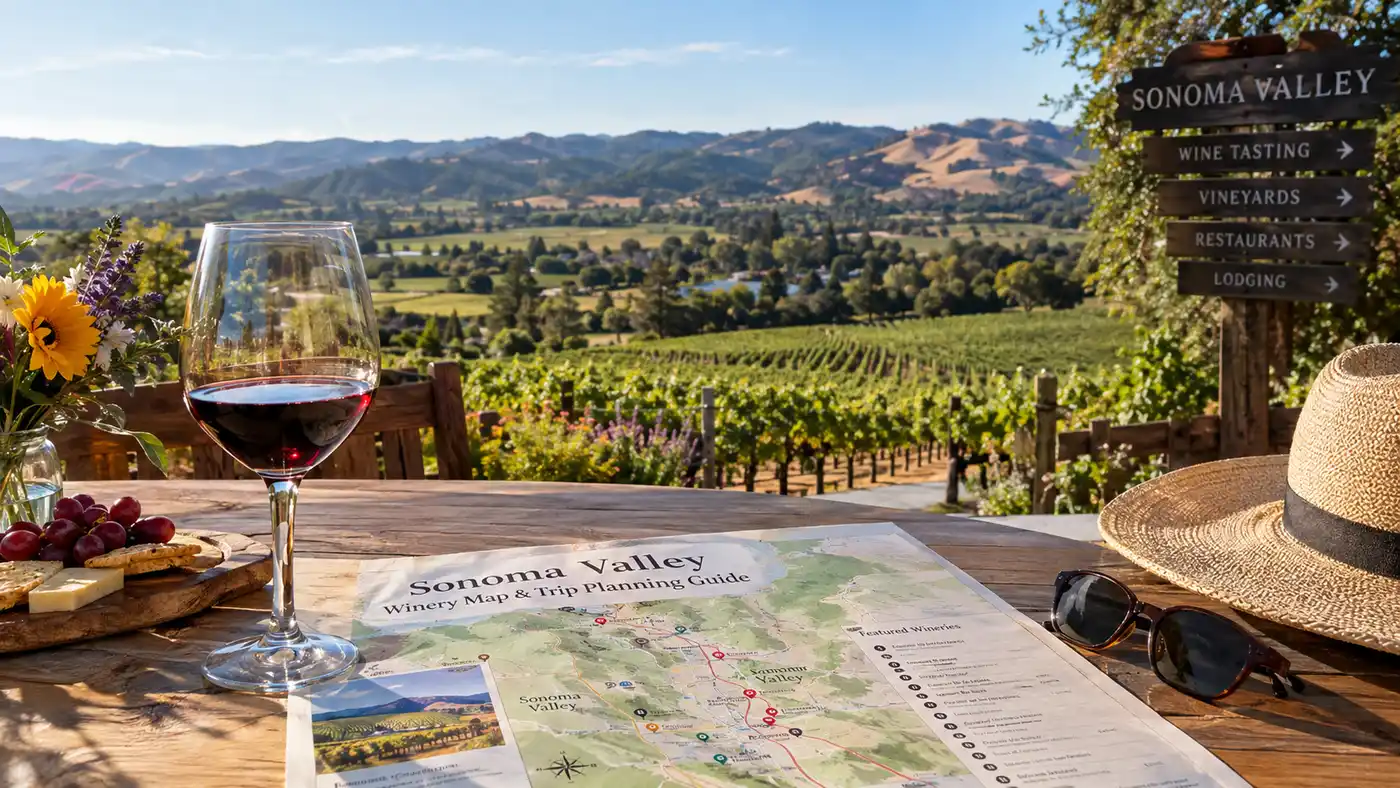
Sonoma Valley Winery Map & Trip Planning Guide
Most first-time visitors stare at a sonoma valley winery map and make the exact same rookie error. They assume the entire region is a neat, bite-sized afternoon drive where you can casually bounce between six tasting rooms before dinner. It looks compact on a phone screen. Then you get behind a slow flatbed truck on Highway 12 with two lane traffic crawling past cow pastures, and suddenly your 2:00 PM appointment in Kenwood vanishes into thin air. Sonoma Valley is roughly 17 miles long from the muddy edge of San Pablo Bay up to the pine-covered ridgeline near Santa Rosa. It holds roughly 100 distinct cellars, historical landmarks, and rugged mountain blocks tucked into steep ravines.
Planning your route requires understanding how geography shapes the driving time, the weather, and the liquid inside your glass. This guide breaks down the valley corridor from south to north, detailing how to cluster your stops, avoid spending your afternoon stranded on a dusty shoulder, and build an itinerary that leaves room to breathe.
Book your sonoma valley wine tasting experience:
Where is Sonoma Valley and How to Read the Wine Map
People throw around the phrase "Sonoma wine country" without realizing how massive it actually is. Sonoma County covers over 1,500 square miles and contains 19 distinct American Viticultural Areas (AVAs). Sonoma Valley is just one specific sliver on the eastern edge of the county, bordering Napa Valley along the Mayacamas Mountains. If someone asks where is Sonoma Valley California on a state map, look right at the hook where the coast ranges pinch together north of San Francisco. It sits about 45 miles north of the Golden Gate Bridge.
When you look at a map of wineries in Sonoma Valley, you are viewing a long, skinny trough formed by ancient volcanic activity. The southern floor opens wide to cold saltwater fog rolling off the bay. The northern tip squeezes tight between Hood Mountain and Sonoma Mountain, trapping sun and heat. That natural transition means you cannot treat this valley as a single monolith. A Chardonnay grown in the windy marsh flats of Los Carneros tastes nothing like a Cabernet Sauvignon harvested from a baked hillside vineyard in Kenwood, even though they share the same highway address.
To avoid spending half your day behind the steering wheel, divide any sonoma valley wine map into three distinct clusters: Carneros and the south, Central Sonoma and Glen Ellen, and Kenwood to the north. Tackling more than one cluster in a single afternoon almost always leads to rushed tastings and frayed tempers.
| Valley Corridor | Key Sub-Regions | Signature Wine Styles | Average Tasting Fee | Drive from Sonoma Plaza |
|---|---|---|---|---|
| Southern Valley | Carneros, Sonoma Valley AVA | Chardonnay, Pinot Noir, Sparkling | $35 to $50 | 10 to 15 minutes south |
| Central Corridor | Sonoma Plaza, Glen Ellen | Zinfandel, Rhone Blends, Syrah | $30 to $45 | 0 to 18 minutes north |
| Northern Corridor | Kenwood, Moon Mountain | Cabernet Sauvignon, Merlot, Old Vine Zin | $40 to $65 | 22 to 30 minutes north |
I usually recommend sticking to one corridor per day. If you book a morning tasting near the bay and an afternoon reservation in Kenwood, you will spend 35 minutes negotiating midday traffic instead of lingering over an outdoor cheese plate.
Mapping the Valley: Three Logical Tasting Routes
Highway 12 serves as the asphalt spine of the entire valley. Almost every sonoma wineries map relies on this single road, which makes navigating straightforward if you know where the side turns lead. The southern base begins in Carneros, where the elevation is practically sea level. Here, the landscape looks like rolling amber carpet dotted with eucalyptus stands and low-slung, wind-scoured vineyards.
Moving north brings you directly into the town of Sonoma. The historic eight-acre plaza forms the beating heart of local history. It was laid out in 1835 by General Mariano Vallejo. If you want to leave the car parked for an entire afternoon, the collection of downtown Sonoma plaza tasting rooms lets you sample small-production bottles while walking past adobe structures, bakeries, and clothing boutiques. The vibe here is completely different from the rural estates just five miles out of town.
Pro tip: Cell phone reception drops dramatically the moment you turn off Highway 12 into the canyons near Glen Ellen or climb Moon Mountain. Download your route offline before pulling out of your hotel parking lot.
Past Sonoma, the highway narrows. Glen Ellen emerges suddenly around a curve, buried under massive valley oaks, redwoods, and wild blackberry brambles. The pace drops noticeably. Writers and artists have hidden out along these creek beds for over a century. The wines here pivot sharply toward old-vine field blends, hearty Zinfandels, and spicy Syrah. Continuing another five miles brings you into Kenwood, where the valley walls climb steeply toward jagged volcanic outcrops. The estates along this stretch often feature grand stone architecture, broad terraces, and deep cellars carved straight into the volcanic rock.
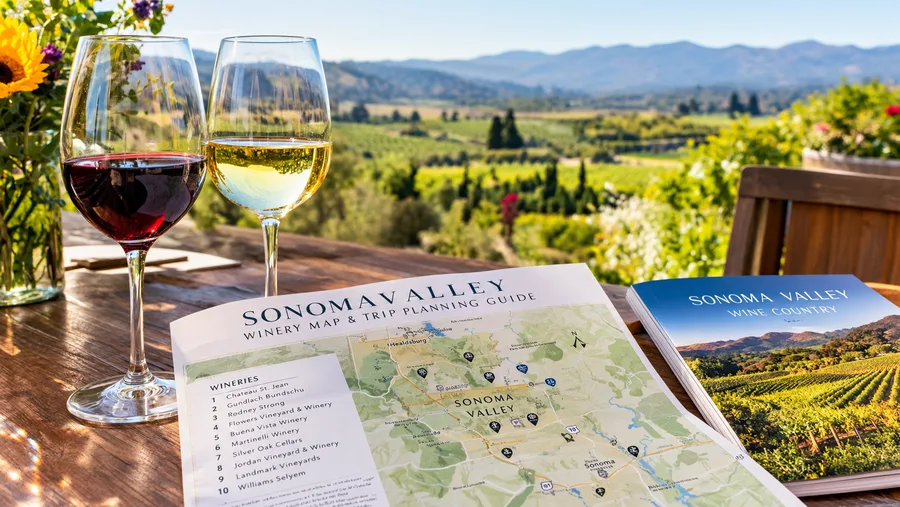
Building a Smart Itinerary: Pacing and Hidden Pockets
The biggest trap travelers fall into when looking at a sonoma wine tasting map is overbooking. Wineries here are not corner bars. Modern tastings are seated, educational experiences that routinely last 75 to 90 minutes. Pourers want to tell you about soil moisture, rootstock, and barrel cooperage. If you attempt four or five stops, by 3:00 PM your palate is dead, your teeth feel sandpaper-dry, and you will not remember whether you liked the $90 reserve bottle or the everyday table blend.
- Maximum stops per day: limit yourself to two or three wineries to preserve your senses and keep the day relaxing.
- Allow buffer time: schedule at least 45 minutes between stops to settle your tab, use the restroom, and navigate winding rural drives.
- Eat early: many tasting rooms do not sell substantive food, so book an early lunch or pack a gourmet picnic basket.
- Watch appointment times: late arrivals often result in forfeited deposits, especially on busy holiday weekends.
Some of the most rewarding discoveries happen when you deviate from the main highway. If you study an elevation-shaded map of vineyards in Sonoma, you will spot Moon Mountain Road clawing its way up the eastern slope. It is a hair-raising, single-lane climb riddled with blind switchbacks and washboard asphalt. Up there, looking down at the fog bank blanketed across the valley floor, you will find some of the oldest active vineyards in California, rooted directly into rust-colored volcanic earth. Exploring these small boutique wineries in Sonoma requires booking well in advance, but the intimacy easily beats fighting the tour-bus crowds on the valley floor.
Note: Ride-share apps like Uber and Lyft are fairly reliable around the downtown Sonoma Plaza, but drivers rarely accept pickups deep in the hills of Kenwood or up Moon Mountain. Arrange private transport if you plan to stray off the valley floor.
Honestly, you need water. Lots of it. Keep a case of bottled water in the trunk of your car. The dry summer air and afternoon sun will dehydrate you before you even notice, particularly when you are sipping wines with 14.5% alcohol.
Book your sonoma valley wine tasting experience:
Things to Do in Sonoma Valley Besides Wine Tasting
Wine fatigue is real. Even the most dedicated collector reaches a point where another glass of oaky red feels like a chore. Fortunately, the valley offers exceptional terrain for days when you want to leave the stemware on the shelf. The ridgelines bordering Highway 12 preserve thousands of acres of protected state and regional parkland.
Jack London State Historic Park sits tucked into the western hills above Glen Ellen. It protects the rustic, sprawling ranch where author Jack London lived, wrote, and farmed until his death in 1916. You can walk through the stone ruins of the Wolf House, an 15,000-square-foot mansion that burned to the ground just nights before London planned to move in. The park trails wander beneath massive second-growth redwoods, past century-old cactus gardens, and around peaceful stone ponds. A trail pass costs around $10 per vehicle.
North toward Kenwood, Sugarloaf Ridge State Park provides a completely different ecosystem. On clear winter afternoons, hiking to the summit of Bald Mountain lets you see both the San Francisco skyline and the Sierra Nevada snowcaps simultaneously. The park features 25 miles of rugged trails, quiet campgrounds, and an astronomical observatory that hosts public night-sky viewing parties through massive telescopes.
Food lovers should budget time for the local markets. The Sonoma Valley cheese trail winds right through the valley, with historic creamery outposts selling fresh goat rounds and raw-milk wedges. Grabbing bread, locally cured charcuterie, and an olive medley makes for an effortless meal on the grass beneath the plaza trees.
Seasons, Timing, and Practical Logistics
Timing your trip changes everything from road congestion to tasting fee structures. The valley runs on an agricultural cycle that dictates hotel pricing and crowds.
- Spring (April to May): mustard flowers coat the vine rows in neon yellow, mornings stay crisp, and tasting rooms are relatively uncrowded.
- Summer (June to August): hot afternoons topping 95 degrees, heavier weekend traffic on Highway 12, and bustling outdoor patios.
- Harvest (September to October): tractors choke the side roads, the sweet scent of fermenting grapes hangs in the air, and tasting rooms hit peak capacity.
- Winter (November to February): rainy days, dormant bare vines, glowing wood fireplaces, and deeply discounted lodging rates.
Weekdays are infinitely superior to weekends. On a Tuesday morning, winemakers often pour behind their own bars and will happily talk shop for 20 minutes. On a Saturday afternoon, those same rooms turn noisy and staff are sprinting between six parties at once. If your schedule forces you into a Saturday visit, book your morning tasting for 10:00 AM sharp. You get the staff at their freshest before palate exhaustion and long lines take over.
Frequently Asked Questions about sonoma valley winery map
How many wineries are there in Sonoma Valley?
Sonoma Valley contains roughly 100 wineries within its 17-mile corridor. Sonoma County as a whole holds over 425 bonded wineries spread across 19 separate wine regions.
Do I need reservations to use a Sonoma Valley wine tasting map?
Yes. The vast majority of Sonoma Valley wineries require advance reservations for seated tastings, particularly on Fridays, Saturdays, and Sundays. Walk-in service is mostly limited to a handful of downtown tasting rooms around Sonoma Plaza.
Can you get around Sonoma Valley without renting a car?
It is difficult without planning. You can explore the downtown Sonoma Plaza entirely on foot, but visiting estates along Highway 12 or out in Glen Ellen requires a rental car, a hired private driver, or joining a guided group van tour.
What is the difference between Sonoma Valley and Sonoma County?
Sonoma County is the broad administrative region encompassing 19 different wine AVAs including Russian River Valley and Alexander Valley. Sonoma Valley is one specific geographic valley located along Highway 12 on the eastern side of the county.
Quick Reference
- Corridor length: 17 miles from Carneros to Kenwood along Highway 12.
- Winery count: roughly 100 estates in the valley proper.
- Recommended daily pace: 2 to 3 winery appointments maximum.
- Drive time from San Francisco: roughly 60 minutes without traffic.
- Top transport tip: reserve drivers early or stay near Sonoma Plaza.
Book your sonoma valley wine tasting experience:
Before You Hit the Road
The best bottle of wine you drink on your trip probably will not come from the grandest castle or the fanciest website. It will be the one you discover down an unmarked gravel driveway, poured by someone with grape skins beneath their fingernails while blue jays squawk in the walnut trees overhead. Print out your map, pick two places that genuinely sound interesting, leave your afternoons loose, and give yourself permission to get slightly lost along the way.
Read more about sonoma valley wine tasting.